

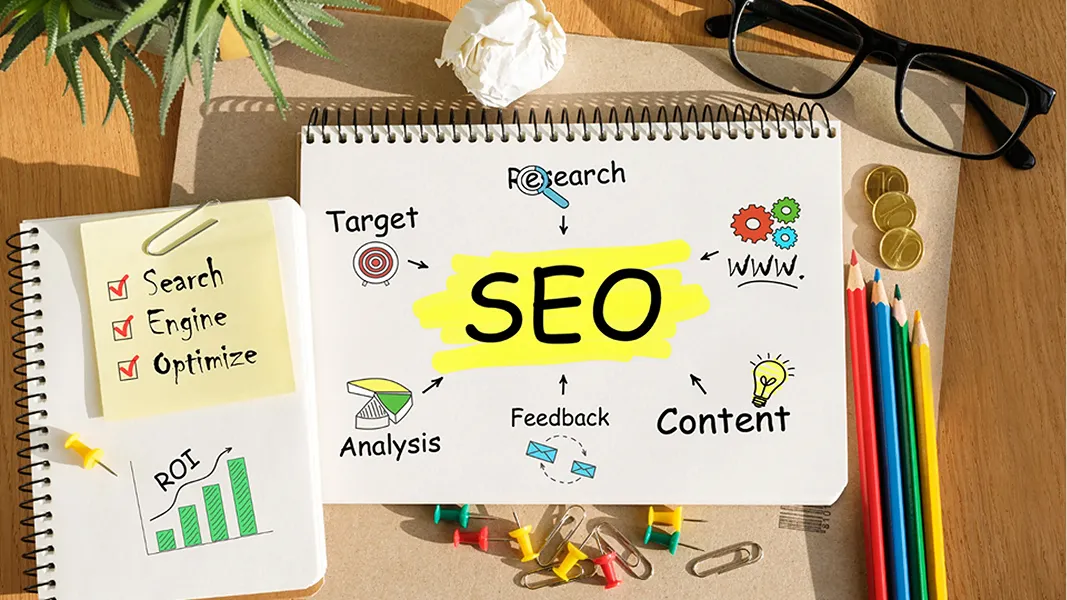
When users search for products, services, or information, they tend to click on results on the first page of Google. Publishing content is not the only solution to getting there. It involves knowing how search engines rank websites and how various SEO practices facilitate such an undertaking.
The SEO has various strategies, and each strategy is concentrated on such aspects as relevance, performance, trust, or location. Neglecting each of the areas may delay the growth of the long-term. In this guide, we will evaluate how the approaches combine to enhance visibility and rankings.
What Is SEO in Digital Marketing?
SEO in digital marketing refers to the technique of enhancing a site so that it appears in the unpaid search results when a user searches a topic, product, or service of interest. When a user enters a query in Google, it searches millions of pages to locate results that most effectively address the user's interest of the user. SEO assists your site to match those expectations by increasing the quality of content, technical structure, and trust.
It is based on organic traffic; unlike advertisements, SEO results do not fade away when the budget is exhausted. An optimized website will be able to generate traffic for months or years.
SEO in marketing works by:
- Matching content with user search intent.
- Making websites easy to crawl and understand.
- Building trust through authority and relevance.
🤔 Did You Know? The global digital advertising and marketing market is projected to reach $786.2 billion by 2026, driven by increased online activity and shifting advertiser priorities.
Types of SEO in Digital Marketing
There are several types of SEO, and each one plays a specific role. Good performance in SEO is achieved through an integration of the appropriate tactics depending on your objectives, target, and market segment.
The most important types of SEO today are as follows:
On-Page SEO
On-page SEO is concerned with all things that you have control over on your web pages. This form of SEO makes sure that your contents are clearly explains the content of the page and assists search engines in correlating your page with search terms.
Major on-page SEO aspects are:
- Keywords research and natural keyword placement.
- Clear page titles and meta descriptions
- Proper use of headings
- Well-written, useful content
- Internal linking between related pages
- Optimization of images through descriptive file names and alt text.
- Clean and readable URLs.
Off-Page SEO
Off-page SEO is anything performed beyond the website that enhances its authority and trust. Alternative websites linking to and mentioning an individual are analyzed as credibility signals by search engines. When search engines can find your content with references on reliable sites, your site is likely to gain trust.
The typical methods of off-page SEO are:
- Getting quality backlinks
- Guest posting on relevant websites
- Brand mentions without links
- Digital PR and media coverage
- Social media visibility
Off-page SEO assists search engines in responding to only one question: Can this site be trusted in comparison to other sites that rank on the same topic of interest?
Technical SEO
Technical SEO emphasizes the extent to which search engines can access, crawl, and index your site. Even the great content may not be able to rank when the search engines have issues loading or interpreting your site.
Technical SEO covers:
- Website speed and performance
- Mobile responsiveness
- Secure HTTPS connection
- XML sitemaps
- Robots.txt configuration
- Fixing broken links and crawl errors
- Avoiding duplicate content
- Clear website structure
Local SEO
Local search optimisation assists companies in being shown in the search results of location-based searches. The type of SEO is a necessity for companies with a local business scope serving a certain city or region, like restaurants, clinics, travel agencies, or repair services.
Local SEO focuses on:
- Google Business Profile optimization
- Local keywords like “near me” or city names
- Consistent business name, address, and phone number
- Customer reviews and ratings
- Local citations and directories
Local SEO will assist businesses to appear in the local search results and map listings, which will subsequently ensure the businesses are easily found and contacted by local customers.
Content SEO
Content SEO is concerned with planning, building, and updating content in a manner that answers user queries in a clear and comprehensive way. The search engines favor solutions, descriptions of subjects, and relevance to the search purpose.
Content SEO includes:
- Creatingblog posts, guides, and landing pages
- Headings to make the content structured
- Covering topics in depth
- Updating outdated information
- Creating content clusters around main topics
💡 Quick Tip: Use long-tail keywords in your headings and content because they generally attract 3-5 percent better organic click-through rates than shorter keywords.
Mobile SEO
Mobile SEO makes sure that your website is compatible with smartphones and tablets. Search engines target mobile-friendly sites since the majority of search processes currently occur through mobile gadgets.
Mobile SEO focuses on:
- Responsive design
- Fast mobile loading speed
- Easy navigation on small screens
- Readable text without zooming
- Clickable buttons and links
E-Commerce SEO
The E-commerce SEO applies to online shops and product-oriented websites. This form of SEO assists the product and category pages to position in terms of purchase-oriented searches.
E-commerce SEO includes:
- Product title and description optimization
- Category page SEO
- Structured data for products
- Handling duplicate content
- Optimizing images and reviews
Good e-commerce SEO ensures that the customers get products when they are willing to purchase, as opposed to when they are browsing.
International SEO
International SEO assists in websites targeting other countries or language users. This form of search engine optimization is significant to companies that have an international presence.
International SEO focuses on:
- Language targeting
- Country-specific domains or subfolders
- Correct use of hreflang tags
- Local currency and regional content
- Cultural relevance
White Hat SEO
White hat SEO is about doing what is right, even though results may be delayed. This is a search engine-friendly strategy and is constructed based on actual users, rather than algorithms. The aim is to produce pages that will be worth ranking as they are useful, correct, and convenient to navigate.
White hat SEO includes:
- Writing content that genuinely answers search queries.
- Using keywords naturally instead of forcing them.
- Enhancing the page layout and internal connectivity.
- Speeding up, securing, and making sites mobile-friendly.
- Getting backlinks by way of helpful content and honest collaborations.
Gray Hat SEO
Gray hat SEO falls in the middle, wherein the rules are not clearly outlined. It also incorporates ways that are not permitted officially, but are not explicitly approved either. Such strategies can be effective in the short term, but they are risky when it comes to search engines altering their rules.
Examples of gray hat SEO include:
- Buying expired domains for link value.
- Aggressive guest posting purely for backlinks.
- Slight content duplication with small rewrites
- Over-optimizing anchor text without obvious spam.
Black Hat SEO
Black hat SEO is concerned with optimization of search results rather than assisting users. This method does not take into account the rules of the search engines and instead uses shortcuts to achieve fast rankings. Although it can provide short-term benefits, it may frequently result in penalties or removal from search results.
Common black hat SEO tactics are:
- Keyword stuffing that ruins readability
- Creating fake backlinks or link farms
- Cloaking content is shown differently to users and search engines
- Auto-generated or scraped content
- Hidden text or links
What is the most important Type of SEO?
No single type of SEO is more important than the others. The ranking of websites by search engines is not a single factor. It is possible to have a great page, and this could not be indexed because of technical SEO. A quick site can be loaded to perfection, but without authority, it might not rank higher in the industry.
All forms of SEO serve a certain purpose:
On-page SEO helps to make the content relevant and address the query of the search process.
Technical SEO ensures that search engines are able to crawl, index, and process the site with no errors.
Off-page SEOis a way to gain trust and authority by means of links and mentions of the brand.
The incorporation of content SEO contributes to addressing the topics fully and aligning the user intent.
The local, mobile, and e-commerce SEO assist in the visibility according to the business nature and the audience behavior.
All these factors are balanced in the best SEO strategy. In the case of a new site, the technical configuration and content understandability are the most important. In the case of competitive industries, off-page authority is essential. In the case of local businesses, local SEO can result in the most conversions.
Future of SEO in Digital Marketing
The future of SEO is shifting towards intent-driven and user-focused strategies. Search engines are becoming more aware of the context, relevance, and quality of content than just through the use of keywords or backlinks.
The trends that will influence SEO in the future:
Relevance and content depth:
Pages that completely address user questions, offer straightforward explanations, and are updated will have a high ranking compared to shallow material.
User experience indicators:
The speed of the websites, mobile functionality, simple navigation, and organized layouts will directly influence the search results.
The alignment of search intent:
The search engine will distinguish the information, navigational, and transactional queries by better aligning the content with the intent of the user.
Authority and trust:
Expert power, authorship, brand consistency, and natural mentions throughout the web will be more effective ranking factors.
AI and automation:
AI-run tools will help in creating, optimizing, and analyzing content, yet human control and authenticity will still be essential.
The Bottom Line
SEO is a strategy to rank a website at the top of the search engine results. Content plays a vital role in SEO because it prioritizes high-quality and relevant content with proper keyword density. SEO is divided into many parts, or you can say, there are many types of SEO. And in this blog, we have covered almost all.
⏩Looking for all kinds of online marketing services that deliver real results? Our experts are ready to help you move forward.
Frequently Asked Questions (FAQs)
The four steps of SEO are
Technical SEO
On-page SEO
Content
Off-page SEO
The different types of SEO tools include:
Keyword research tools – find relevant search terms (e.g., Ahrefs, SEMrush).
On-page SEO tools – optimize content and metadata (e.g., Yoast SEO).
Technical SEO tools – analyze site speed, crawlability, and errors (e.g., Google Search Console, Screaming Frog).
Backlink analysis tools – track link profiles and authority (e.g., Moz, Majestic).
Content optimization tools – improve readability and relevance (e.g., SurferSEO, Clearscope).
The answer can not be fully yes or no. ChatGPT can help in SEO, but it cannot replace a full seo tool and human strategy.
In digital marketing, SEO is the act of making websites more visible in organic search results, which assists in attracting the right traffic and enhancing online presence without paid advertising.
The basic rules of SEO are
Produce high-quality content
Use relevant keywords naturally
Optimize page speed
Ensure mobile-friendly design
Build trusted backlinks
Improve user experience